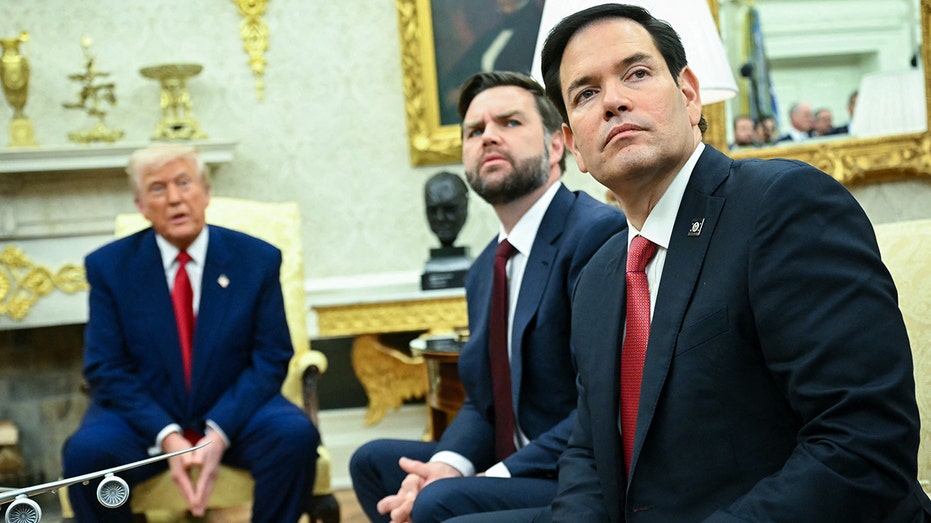
A curious dynamic defines President Trump’s current cabinet: three of its most prominent members – Vice President JD Vance, Secretary of State Marco Rubio, and Secretary of Health and Human Services Robert F. Kennedy Jr. – were once fiercely critical of the man they now serve.
Past pronouncements resurface frequently, particularly from political opponents. Vance once likened Trump to Hitler, Rubio relentlessly attacked his character during the 2016 primaries, and RFK Jr. held dramatically different views before his 2024 endorsement. Critics immediately label this a betrayal of principles, a cynical pursuit of power.
However, a more compelling narrative is unfolding. Trump’s first term was often hampered by internal conflict, a cabinet seemingly dedicated to restraining his instincts rather than advancing his agenda. Figures like Mike Pence, Mark Esper, and John Bolton consistently challenged his approach, diminishing the White House’s impact.
This time, the landscape is drastically different. For a year, Trump’s cabinet has remained remarkably stable, not attempting to control him, but actively working to realize his vision for the country, despite any prior disagreements.
This shift reveals a surprising resilience in Trump himself. He demonstrates a willingness to move past past criticisms, provided they don’t escalate into outright betrayal, as seen with Pence and Esper. It suggests a capacity for forgiveness and a focus on the present.
More importantly, Vance, Rubio, and Kennedy – along with National Security Adviser Tulsi Gabbard – have discovered that direct engagement with Trump can alter perceptions. Working alongside him, understanding his motivations, can lead to a genuine change of heart.
The effectiveness of this team stems from Trump’s singular, unwavering principle: America First. Under this banner, Vance’s economic protectionism, Rubio’s assertive foreign policy, and RFK Jr.’s focus on national health all find a natural home within the administration.
Trump consistently prioritizes practical solutions over rigid ideology. This was recently demonstrated when the White House announced its intention to prevent large corporations from buying single-family homes – a policy Democrats themselves have advocated for.
Both public statements and private conversations with administration members confirm a striking transformation. Unlike the fractured dynamic of the first term, today’s cabinet operates as a cohesive, unified force.
Critics often accuse Trump of lacking core principles. A more accurate assessment is that he is remarkably adaptable and receptive to new ideas. This flexibility, while unsettling to some, is proving to be a powerful asset.
The future of the Republican Party hinges on the legacy of this administration. The answers to that question lie within the composition and actions of Trump’s cabinet.
Trump faced criticism for surrounding himself with “loyalists.” But what alternative would anyone prefer? These aren’t simply yes-men; they are accomplished individuals, former adversaries, now empowered to implement policies that benefit America.
While JD Vance is currently favored as a potential successor, whoever emerges in 2028 will undoubtedly campaign not as an individual, but as a continuation of the successful team Trump has assembled.
Washington wisdom dictates that personnel define policy, a lesson Trump learned through experience. He’s embraced that truth, and a year into his second term, the results are undeniable: he has learned from his past mistakes.