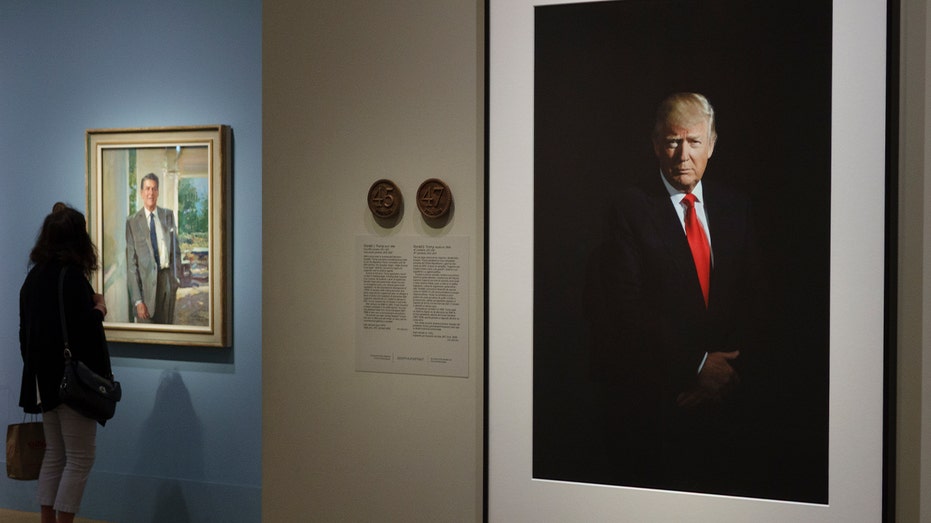
A shift occurred within the hallowed halls of the Smithsonian’s National Portrait Gallery last week. The portrait of former President Donald Trump underwent a quiet, yet significant, alteration – a new image replacing the previous one, and with it, a notable reduction in accompanying text.
The change followed a period of pointed criticism from Trump himself, who labeled museums as “woke” and accused them of bias. Simultaneously, a directive from the White House demanded extensive internal records from the Smithsonian, setting a deadline and hinting at potential funding repercussions.
Visitors now encounter a stark black-and-white photograph captured by White House photographer Daniel Torok. It depicts Trump with his fists firmly planted on the Resolute Desk, his gaze unwavering and directed straight at the viewer – a powerful, commanding presence.
Previously, the display included a concise, yet pointed, summary of Trump’s presidency: two impeachments and the shadow of the January 6th Capitol attack. This text, detailing the charges of abuse of power and incitement of insurrection, has been replaced with a simple listing of his years in office.
The alteration has drawn attention to a disparity in the exhibit. Trump is now the sole president whose display lacks detailed contextual information regarding pivotal moments of his time in office. Portraits of other presidents, including those of Bill Clinton and Andrew Johnson – both also impeached – still retain their historical annotations.
Gallery officials explained the change as part of an ongoing exploration of display styles, suggesting a move towards more general “tombstone labels” focusing on basic information like the artist’s name. The new photograph, they stated, will remain until a formal painted portrait is completed.
The White House responded with satisfaction, a spokesperson describing the new image as capturing Trump’s “unmatched aura” and ensuring his presence would be “seen and felt” throughout the gallery. The former president himself celebrated the change on his social media platform.
This adjustment arrives amidst a broader White House initiative – a sweeping review of all national museums in anticipation of the nation’s 250th anniversary. The review aims to ensure museums accurately reflect and celebrate American achievements, a concern repeatedly voiced by Trump.
The subtle shift in presentation has ignited a quiet debate about historical narrative, institutional independence, and the enduring power of image in shaping public perception. It’s a reminder that even within the seemingly neutral spaces of museums, history is constantly being interpreted, and sometimes, re-written.