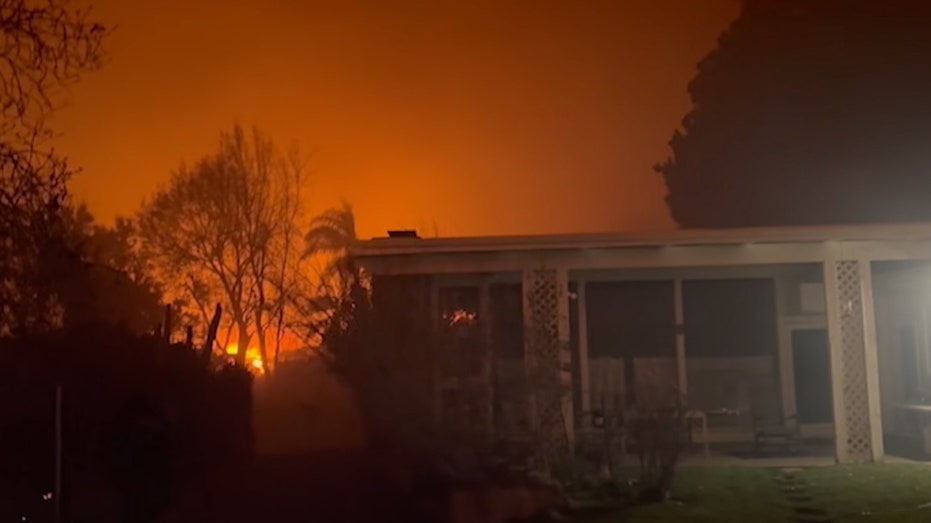
A year has passed since twin wildfires ravaged Los Angeles County, yet the scars remain etched deeply into the lives of thousands. Thirty-one lives were lost, and over 16,000 structures vanished in flames that burned for a relentless month, reshaping landscapes and shattering communities.
In the hills of Pacific Palisades and Malibu, the fires consumed 37 square miles, leaving behind a wasteland of over 6,000 destroyed homes. Simultaneously, the Eaton Fire in Altadena obliterated more than 9,000 buildings, creating a parallel story of devastation and loss.
Today, the path to recovery is fraught with obstacles. Many survivors are trapped in bureaucratic delays, awaiting the permits needed to rebuild their lives. Others face the hidden dangers of contaminated land, the pain of displacement, and the agonizingly slow return to normalcy.
Nicole Gyarmathy returns to the area near her former apartment, not to mourn, but to rebuild – one flower, one tree at a time. These small acts of restoration are her way of processing grief and offering a beacon of hope to others returning to empty lots, a silent promise that they haven’t been forgotten.
The anniversary of the fires was marked not only with remembrance but with protests, a raw expression of the lingering anger and frustration felt by residents. The recovery, it’s clear, has been far from uniform.
Environmental lawyer Ken Ehrlich remembers the moment he arrived at what was once his home: a smoldering ruin, marked only by a solitary chimney. The shock was visceral, a scream ripped from his throat as he realized everything was gone. Now, months later, heavy machinery finally signals the beginning of rebuilding on his property.
Yet, progress is painfully slow. A recent analysis revealed that fewer than 14 percent of homes destroyed in the Palisades have received rebuilding permits. Even those structures that remain standing are often rendered uninhabitable by the pervasive threat of smoke, ash, and asbestos.
“The threat is real… it’s a big problem,” Ehrlich acknowledges, but his voice carries a note of determination. “I’m really excited to move forward and build. I want to come back to the neighborhood. It’s who we are.” His hope isn’t just about rebuilding a house; it’s about resurrecting a community.
Across the county in Altadena, the Eaton Fire exploded under terrifying conditions. Already stretched thin battling the Palisades blaze, firefighters were grounded by 90-mile-per-hour winds as the fire surged out of control.
Brian Childs now stands on his cleared property, a blank canvas where his home once stood. He recalls the night of the fire, a terrifying spectacle of black smoke and roaring flames. Within minutes, his family’s legacy was reduced to ash.
Only ten homes have been rebuilt in Altadena so far, but Childs’ plans are approved, and permits are progressing. He envisions a future where his family’s roots run deep, a legacy passed down through generations.
But for many in Altadena, that future remains elusive. Numerous displaced residents were renters, and a year later, they continue to struggle with housing insecurity. The need is urgent, a constant plea for assistance.
Palin Ngaotheppitak, working with a local nonprofit, witnesses the daily struggle firsthand. Applications for assistance continue to pour in, a heartbreaking reminder of those still living in their cars, a year after losing everything.
Beacon Housing is working to build long-term housing for low-income survivors, a testament to the community’s unwavering commitment to its most vulnerable members. Ngaotheppitak, while awaiting progress on her own home, finds strength in helping others. “We’re really looking out for our neighbors here. We are in this together.”