The heart of Canada’s auto industry, a sprawling network concentrated in Southwestern Ontario, faced a relentless storm in 2025. From Windsor to Guelph, the sector braced for impact as a familiar, yet deeply unsettling, force returned to power south of the border.
January 20th marked a year since the shift, unleashing protectionist policies and igniting a trade war with Canada. Uncertainty became the industry’s unwelcome companion, threatening the livelihoods of thousands and casting a long shadow over the future of automotive manufacturing in the country.
Initial fears of complete devastation, triggered by punitive 25% tariffs on Canadian-built vehicles and parts, haven’t fully materialized. The Canada–United States–Mexico Agreement, or CUSMA, offered a crucial, though imperfect, shield. But beneath the surface, a precarious situation persisted, leaving the industry vulnerable and exposed.
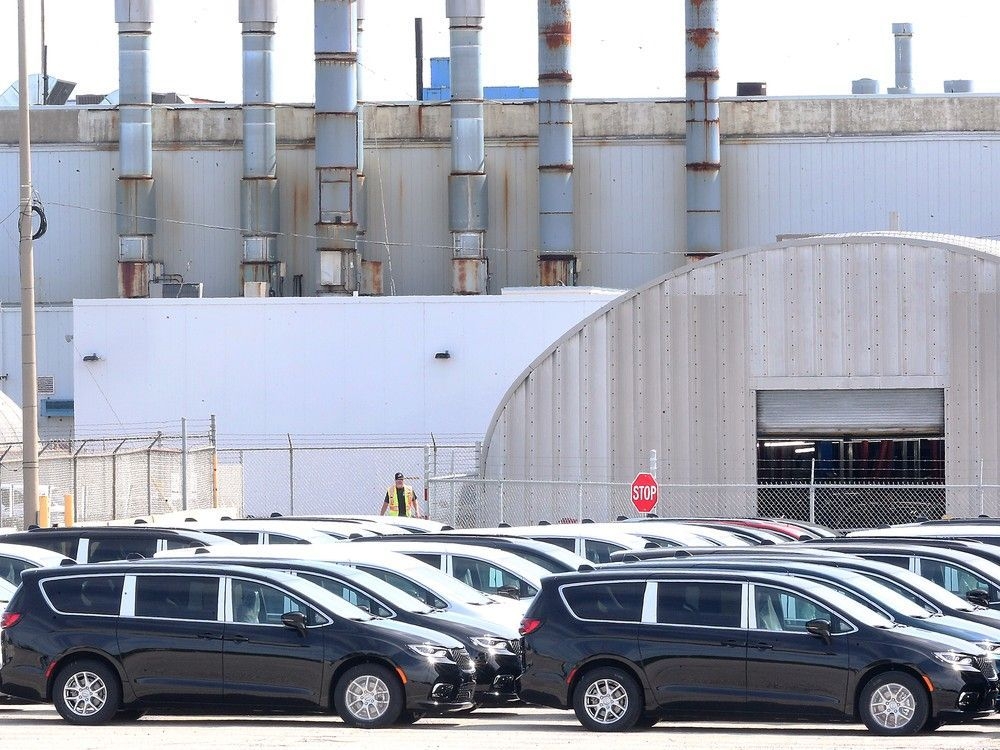
Just a year prior, Canada’s auto sector had been surging forward, boldly embracing an electrified future. Billions were pledged for groundbreaking projects – a Volkswagen battery plant in St. Thomas, a Stellantis and LG facility in Windsor – signaling a commitment to innovation and a greener tomorrow. Governments at both the provincial and federal levels enthusiastically joined the movement, promising substantial financial support.
Then came the tariffs, a sudden and jarring blow. Uncertainty, a poison to any industry reliant on careful planning and tight margins, spread rapidly. The initial optimism began to erode, replaced by a growing sense of unease.
“It’s a cause for concern for the entire industry,” stated David Adams, CEO of Global Automakers of Canada. “When we have uncertainty around accessing the U.S. market, it creates a challenging environment for production in Canada. It requires significant planning and agility to demonstrate Canada’s value as an investment location.” Despite the challenges, Adams maintained the sector was “battered, but not broken.”
The damage extended beyond the tariffs themselves. The abrupt end of electric vehicle purchase subsidies, both in the U.S. and Canada, dramatically cooled consumer demand. Electric vehicles, still carrying a price premium, became harder to sell, forcing automakers to reassess their strategies and, in some cases, halt production of certain electric models.
“We had based a lot of our future on the transition to electric vehicles,” Adams explained. “That transition will continue, but at a much slower pace.”
While CUSMA provided some relief, the impact was uneven. Volkswagen pressed ahead with its St. Thomas plant, attracting a significant investment from Norwegian company Vianode. However, other manufacturers faltered.

Honda postponed plans to retool its Alliston plant for battery production. Ford abandoned its vision of transforming its Oakville facility into an EV hub, reverting to gas-powered vehicles. Stellantis, while adding a shift at its Windsor plant, simultaneously moved Jeep Compass production to Illinois. General Motors shuttered its Cami plant in Ingersoll due to declining BrightDrop van sales and announced a shift reduction at its Oshawa facility, impacting nearly 2,000 workers.
Unifor national president Lana Payne acknowledged the situation was dire, despite not reaching the worst-case predictions. “Everyone last year was asking if anything would be left by year-end,” she said. “But that shouldn’t diminish the real situation: a bleeding of investment from Canada’s auto sector. The chaos and uncertainty continue.”
Now, all eyes are fixed on 2026 and the upcoming review of CUSMA, scheduled to begin in July. The future of the industry, and the jobs of countless Canadians, hangs in the balance. Beyond the auto sector specifically, tariffs on steel and aluminum continue to create friction.
Experts predict a continued investment slowdown until the trade agreement is renegotiated and a clear path forward emerges. “You’ll see a lag in investment until the free trade agreement is settled and manufacturers understand the playing field,” noted Jason Bates, manager of the Excellence in Manufacturing Consortium.
The U.S. is expected to demand further concessions, potentially increasing U.S. content requirements for vehicles sold within its borders. While a complete collapse of the trade deal is considered unlikely, Canada must prepare for a reality where tariffs remain a factor.
But Payne refuses to accept this as inevitable. She emphasizes the significance of the Canadian market, where consumers spend approximately $100 billion annually on vehicles. “Those companies need this market to help their bottom line,” she asserted. “Canada can say, ‘We won’t make it easy for you to access this market unless you build here because you sell here.’ That’s the principle we must take into these trade talks.”