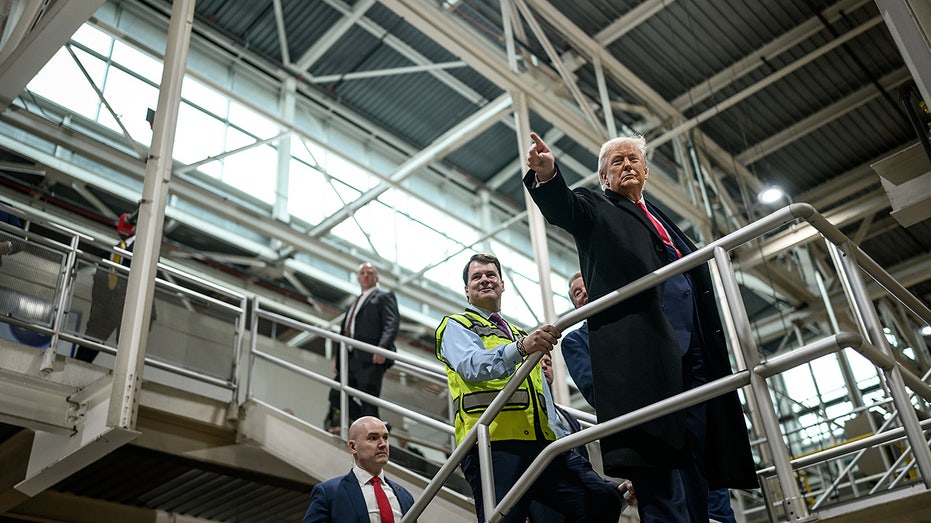
The visit began with a carefully orchestrated display of American manufacturing might. Former President Trump arrived at the Ford F-150 plant in Dearborn, Michigan, greeted by the hum of machinery and the faces of the workforce. He moved through the facility, shaking hands and posing for selfies, a picture of presidential engagement.
But the carefully constructed scene fractured quickly. As Trump walked alongside Ford Executive Chairman Bill Ford, Jr., a voice cut through the controlled environment. A worker, fueled by visible anger, unleashed a shouted accusation – a harsh, personal attack that instantly shifted the atmosphere.
The response was immediate and startling. A defiant gesture, a raised middle finger, and a muttered expletive from the former President. The moment, captured by onlookers, sparked a firestorm of reaction and debate, a raw display of emotion in a traditionally formal setting.

A spokesperson attempted to frame the incident as a justified reaction to unprovoked hostility, characterizing the outburst as a “fit of rage” and the response as “appropriate and unambiguous.” The statement sought to control the narrative, but the image had already taken hold.
The visit occurred against a backdrop of claims regarding a resurgence in the American auto industry. Reports highlighted increased vehicle sales across major manufacturers like Ford, General Motors, and Stellantis, suggesting a period of renewed strength.
Arguments were made that vehicle affordability had improved, citing decreased prices for both new and used cars, alongside lower maintenance and insurance costs. A new tax deduction for interest on loans for American-made vehicles was also presented as a benefit to consumers.
Significant investments in domestic manufacturing were emphasized, with automakers committing billions to expand U.S.-based production facilities. This influx of capital was touted as a source of job creation and a strengthening of American supply chains.
The implementation of tariffs was defended, with claims that they had not led to increased vehicle prices, but instead spurred a revival in domestic manufacturing. The argument was presented that these tariffs had a positive impact without contributing to inflation.
Furthermore, the rollback of certain regulations, particularly fuel economy standards, was portrayed as a victory for affordability. These changes were said to have saved consumers money and made U.S. production more competitive on a global scale.

![ALITO DESTROYS ACLU LAWYER With SIMPLE Question—The Response is SHOCKING! [VIDEO]](https://www.thegatewaypundit.com/wp-content/uploads/2026/01/justice-alito-and-aclu-lawyer-1200x630.jpg)