Former President Trump has signaled a striking indifference towards the current trade agreement with Canada and Mexico, a pact slated for renewal later this year. During a recent visit to a Ford plant, he dismissed the agreement as largely inconsequential, stating bluntly that the United States doesn’t truly *need* products from its North American neighbors.
His comments represent a significant shift in approach. While he signed the Canada-United States-Mexico Agreement (CUSMA) in 2020, replacing the long-standing NAFTA, he now appears to favor a return to individual trade deals with both Canada and Mexico. This preference stems from a belief that the economic dynamics with each country are fundamentally different.
The current agreement includes a mandatory review after six years, and the upcoming negotiations are poised to be contentious. Trump’s vision centers on bolstering domestic manufacturing, specifically aiming to bring auto production entirely within U.S. borders. He explicitly stated his desire to “build cars here, not in Canada,” revealing a clear prioritization of American jobs and industry.
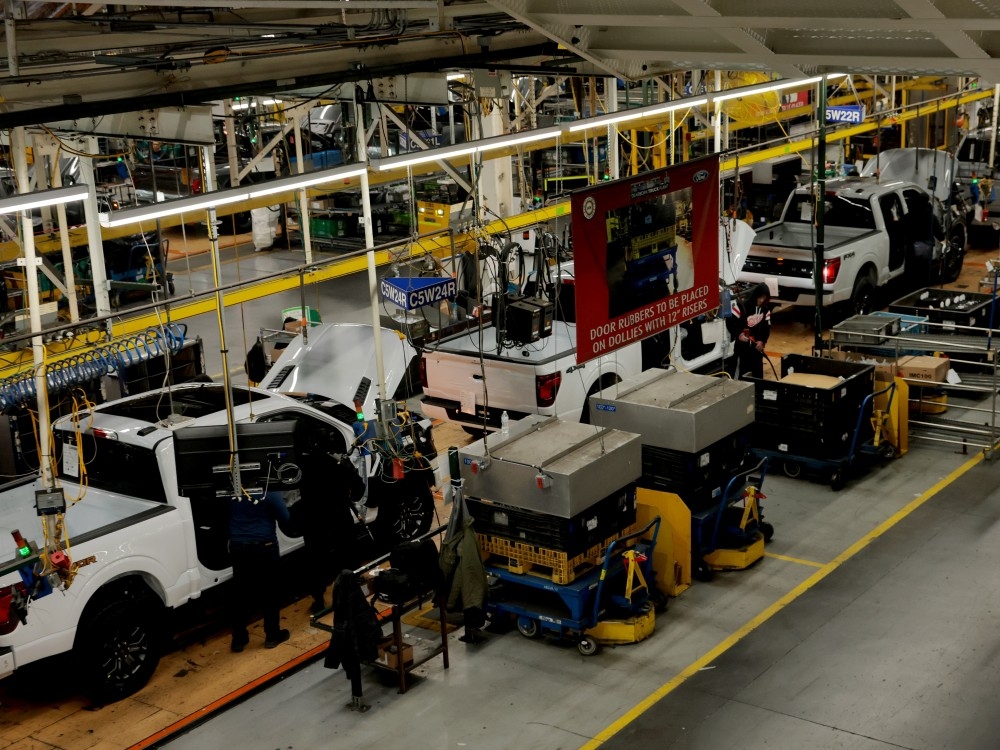
This stance clashes directly with the integrated supply chains of major automakers. Companies like General Motors, Ford, and Stellantis have deeply interwoven operations across all three countries, relying on the efficiencies provided by CUSMA to produce hundreds of thousands of vehicles annually. These companies have actively urged the administration to extend the agreement, citing its importance to global competitiveness.
The U.S. currently imports a vast array of goods from Canada, totaling $584 billion in 2024 alone. This includes essential components like vehicles and auto parts, vital energy resources such as oil and natural gas, and crucial materials like aluminum, steel, and lumber. These imports underpin numerous American industries and contribute significantly to the nation’s economy.
U.S. Trade Representative Jamieson Greer has echoed Trump’s sentiment, acknowledging the distinct economic landscapes of Canada and Mexico. He highlighted differences in labor practices, import-export profiles, and even the rule of law, suggesting that separate negotiations could yield more favorable outcomes for the United States.
As the July 1st review date approaches, Canada is preparing its own strategy. Minister of Internal Trade Dominic LeBlanc has begun consultations with key industries, including dairy and aluminum, to gather input and address potential challenges. Prime Minister Mark Carney will also convene with provincial leaders to forge a unified approach to the negotiations.
The stakes are high, with the potential for a complete overhaul of North American trade relations. The outcome will not only impact the economies of the three nations but also reshape the future of manufacturing, supply chains, and international commerce in the region. The coming months will be critical as negotiators attempt to navigate these complex and potentially divisive issues.