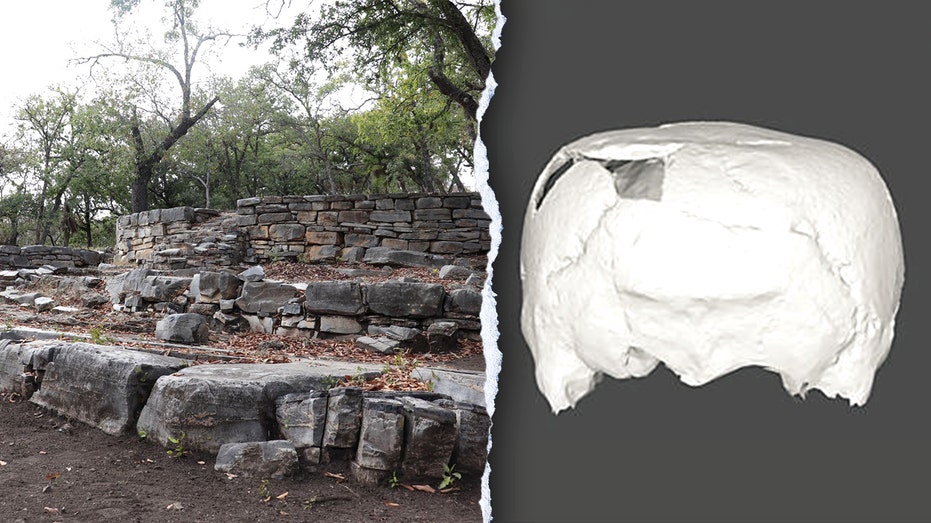
Deep within an ancient village in Mexico, archaeologists have unearthed a skull unlike any seen before – a testament to a long-vanished culture and its extraordinary practices. The 1,400-year-old remains, discovered in the Balcón de Montezuma Archaeological Zone, present a startling image: a head deliberately reshaped into a remarkably flat, cube-like form.
The skull belonged to a man who lived between 400 and 900 A.D., reaching over the age of 40. His head wasn’t simply flattened front to back, a practice known as cranial deformation, but also possessed an unusually level crown, resulting in a truly unique, almost geometric shape. This combination of modifications – tabular erect and tabular superior – had never before been documented in this part of Mesoamerica.
Researchers believe this intentional reshaping wasn’t merely aesthetic. It was a powerful statement, a visible marker of identity and status within the community. Not everyone at the site bore these modifications, suggesting this individual was deliberately distinguished from his peers, occupying a unique position within the social structure.
While not necessarily indicative of high social rank, experts theorize the man may have been a shaman or held a similarly influential spiritual role. The deliberate alteration of his skull could have been a physical manifestation of his connection to the unseen world, a symbol of his power and authority.
The grave itself offered further clues to this man’s distinctiveness. Alongside the skull, archaeologists found a scattering of small, circular shell beads – personal adornments suggesting a level of care and reverence reserved for those considered special. These details paint a picture of a man set apart, even in death.
This discovery isn’t isolated. It adds a crucial piece to the puzzle of intercultural relationships in the Huasteca region, revealing a vibrant tapestry of ethnic diversity and offering insights into the physical characteristics of its ancient inhabitants. The find highlights the complex interactions between communities across Northern Mexico and the Sierra Madre Oriental.
The year continues to yield remarkable archaeological treasures. In El Salvador, excavators recently uncovered ancient puppets atop a pyramid, dating back over 2,400 years. And in Belize, a couple stumbled upon the tomb of a legendary Mayan king within the ancient city of Caracol, a testament to a civilization that flourished centuries ago.
Each discovery serves as a powerful reminder of the rich, complex histories hidden beneath our feet, waiting to be brought to light and offering glimpses into the lives of those who came before us. These unearthed stories reshape our understanding of the past, revealing the ingenuity, artistry, and enduring mysteries of ancient cultures.