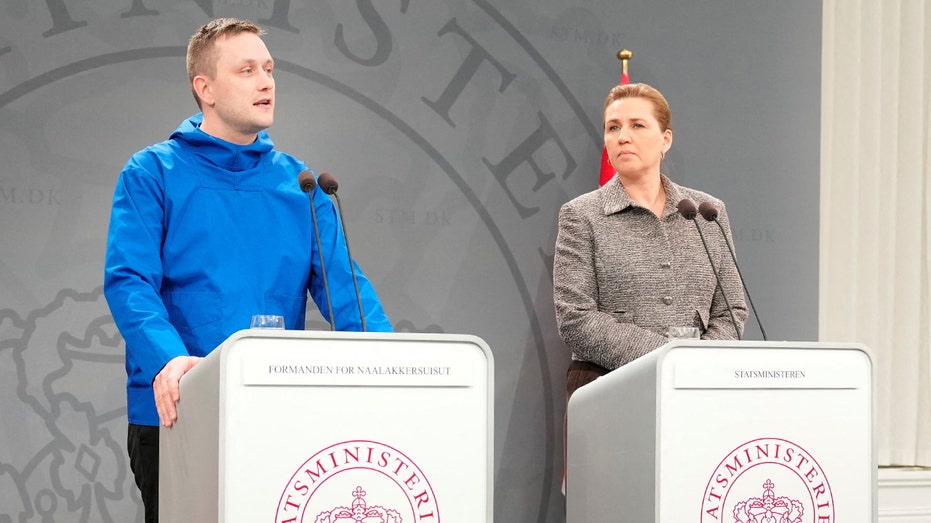
A stark choice has been laid bare for Greenland: align with the United States or remain a territory of Denmark. The island’s prime minister, Jens-Frederik Nielsen, unequivocally stated his preference, declaring “we choose Denmark” during a press conference alongside his Danish counterpart.
This decisive statement arrives amidst escalating geopolitical tensions and a surprising overture from a former U.S. president. The possibility of a U.S. acquisition of Greenland, not a lease, was publicly discussed, fueled by concerns over the territory’s limited defenses and the potential for Russian or Chinese influence.
Nielsen emphasized the strength of the existing relationship within the Kingdom of Denmark, framing the situation as a critical juncture. He asserted a unified stance, underscoring the importance of maintaining that alliance in the face of global instability.
The urgency of the situation prompted high-level diplomatic efforts. Denmark’s Foreign Minister, Lars Lokke Rasmussen, and his Greenlandic counterpart, Vivian Motzfeldt, are scheduled to meet with U.S. officials at the White House to directly address the concerns and navigate the complex discussions.
The former president had voiced strong opinions on the matter, suggesting Greenland itself should initiate negotiations to prevent a power vacuum. He characterized Greenland’s current defense capabilities as woefully inadequate, famously referencing “two dog sleds” as the extent of their protection.
His vision centered on preventing rivals from gaining a foothold in the Arctic. He made it clear that his administration would only consider a full acquisition of Greenland, viewing it as essential for both U.S. and NATO security interests.
The upcoming meeting at the White House represents a crucial opportunity for direct dialogue. Rasmussen expressed the need for a frank and open conversation, hoping to de-escalate tensions and find a path forward that respects Greenland’s autonomy and addresses the broader strategic concerns.
The future of Greenland hangs in the balance, a small island nation caught in the crosscurrents of global power dynamics. The outcome of these discussions will undoubtedly shape the Arctic landscape for decades to come.