The fate of transgender athletes hung in the balance Tuesday as the Supreme Court wrestled with the complex question of fairness in women’s and girls’ sports. For over three hours, justices probed the legal and emotional core of state bans prohibiting transgender females from competing, a debate steeped in deeply held beliefs about equality and opportunity.
At the heart of the arguments were two cases: one from Idaho, the other from West Virginia. Both states defend laws restricting participation based on sex assigned at birth, citing the need to protect a level playing field and ensure student safety. Opposing them were lawyers representing high school and college students, arguing the bans are discriminatory and undermine the dignity of transgender youth.
The justices grappled with fundamental constitutional questions – does the law violate equal protection, and does Title IX, the landmark law prohibiting sex discrimination in education, apply to these cases? A clear majority of the court, particularly the conservative justices, signaled a willingness to uphold the state restrictions in some form.
Justice Sonia Sotomayor powerfully challenged the notion that the relatively small number of transgender individuals diminishes their right to equal treatment. “The numbers don’t talk about the human beings,” she stated, emphasizing the individual rights at stake. Justice Ketanji Brown Jackson directly questioned the legal basis of the bans, asking why classifying someone based on their transgender status wasn’t inherently discriminatory.
Chief Justice Roberts, however, raised concerns about the broader implications of carving out exceptions. He questioned whether accommodating a smaller group could open the door to widespread changes across various sectors, extending far beyond athletics. The debate centered on whether a sex-based classification automatically equates to a transgender classification.
The arguments also touched upon the perceived competitive advantages some transgender athletes might possess. Justice Alito acknowledged the genuine concerns of female athletes who fear unfair competition, questioning whether opposing their participation automatically equates to bigotry. Justice Kavanaugh, a former coach, highlighted the real harm felt by athletes who miss out on opportunities.
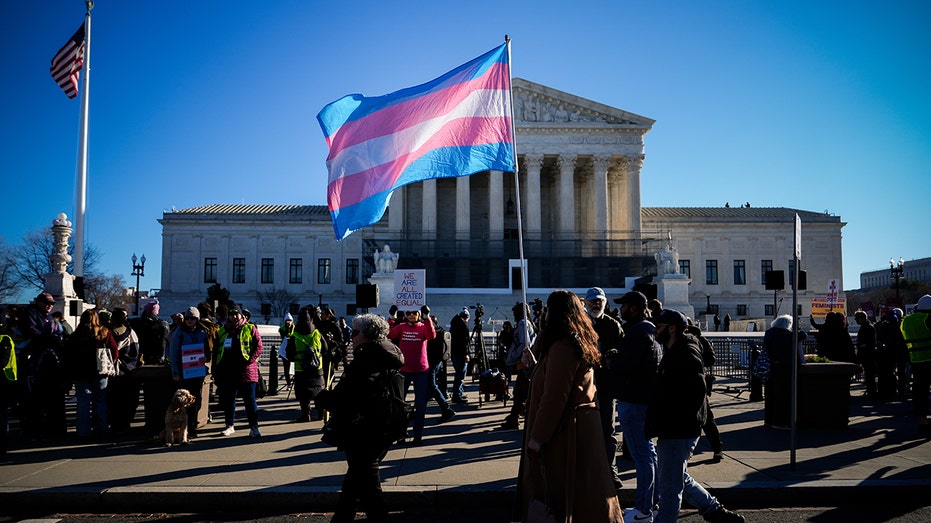
Beyond the courtroom, the issue ignited passionate rallies. Activists on both sides voiced their convictions, with signs proclaiming “protect women’s sports” and “trans rights are human rights.” Inside, Becky Pepper-Jackson, a West Virginia track athlete who qualified for the state meet, and Lindsay Hecox, a college student from Idaho, were present, their futures potentially shaped by the court’s decision.
Lindsay Hecox now fears further harassment and has expressed a desire to withdraw from the case, but the court will address the question of whether the case is moot. Becky Pepper-Jackson, who has identified as female since childhood, has been a vocal advocate for inclusion, and her story embodies the personal stakes of this legal battle.
The court considered a flood of amicus briefs from states, members of Congress, athletes, doctors, and scholars, reflecting the widespread impact of the issue. Even the Trump administration weighed in, arguing that Title IX does not protect transgender females from sex discrimination.
Justice Jackson challenged this narrow interpretation, questioning why a significant number of affected individuals should be required to overturn a discriminatory law. The justices also explored hypothetical scenarios, questioning how sex-based bans could extend beyond athletics into areas like science departments and chess clubs.
The court’s past rulings on LGBTQ+ rights offer a glimpse into potential outcomes. While the court previously ruled that workplace discrimination against transgender people constitutes sex discrimination, it recently declined to extend that protection to state bans on gender-affirming care for minors. This cautious approach may guide their decision in the current cases.
Justice Kavanaugh questioned whether the court should intervene and impose a national standard when half the states already allow transgender athletes to participate. A ruling against the students could return the issue to the states, perpetuating the current patchwork of laws. The Supreme Court is expected to issue its decision by early summer, a decision that will resonate far beyond the playing field.