A seismic shift in North American trade relations may be on the horizon. Former President Trump, during a visit to a Michigan Ford plant, dismissed the Canada-United States-Mexico Agreement – known as CUSMA – as largely inconsequential to the United States, and even suggested Americans have no need for Canadian goods.
His blunt assessment sent ripples of concern through Ottawa and Mexico City, particularly as a mandatory review of the trade pact’s future looms this year. Trump’s words weren’t couched in diplomatic language; he stated plainly that while Canada desires the agreement, the U.S. doesn’t require anything from its northern neighbor.
The current agreement has, until now, acted as a crucial buffer, shielding Canada and Mexico from the full force of Trump’s protectionist tariffs. Last year, he imposed duties of up to 35% on Canadian goods, citing concerns over fentanyl, but these tariffs were waived for products adhering to CUSMA standards.
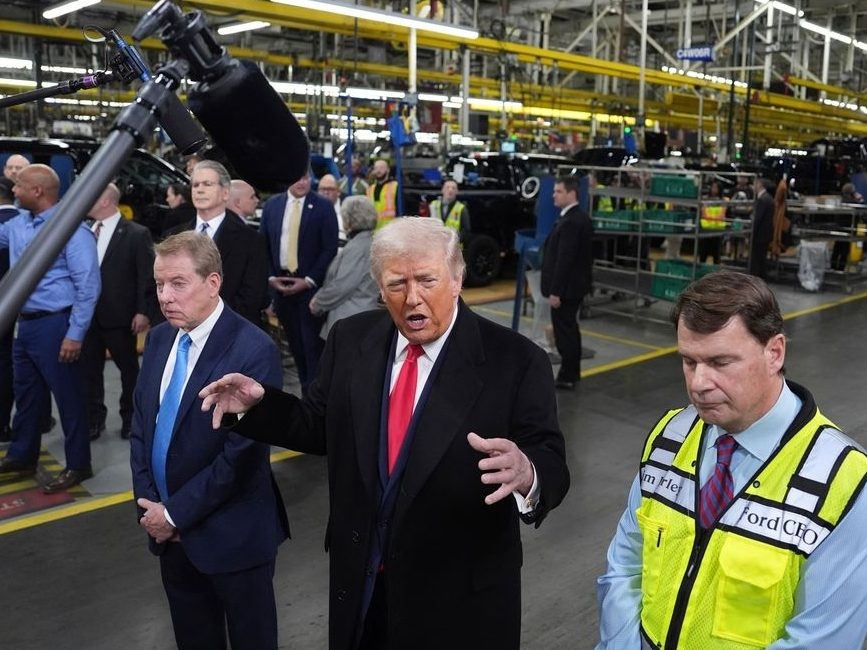
Despite this protection, Canadian industries continue to grapple with sector-specific tariffs levied on vital exports like steel, aluminum, automobiles, lumber, copper, and cabinetry. Trump reiterated his commitment to automobile tariffs, emphasizing his desire to see these vehicles manufactured solely within the United States.
This stance directly challenges the deeply integrated automotive industry between the U.S. and Canada, particularly in Detroit – historically known as “Motor City” and home to the “Big Three” automakers. For decades, the two nations have shared a complex and interwoven automotive supply chain.
Trump also downplayed the importance of raw materials sourced from Canada, asserting that the U.S. possesses ample domestic resources. This declaration ignores the long-standing reliance on Canadian supplies for critical components of American manufacturing.
CUSMA itself was a product of the first Trump administration, a hard-fought negotiation that tested Canada’s resolve. While initially hailed as a success by all three countries, replacing the previous North American Free Trade Agreement, its future is now deeply uncertain.
Since returning to office, Trump has repeatedly questioned CUSMA’s value, consistently claiming the U.S. can thrive independently of Canadian trade. He previously labeled the deal “transitional,” hinting it may have already served its purpose.
The upcoming review in July presents three distinct paths: a 16-year renewal, complete withdrawal, or a non-renewal/non-withdrawal scenario that would trigger ongoing annual negotiations. Trump’s recent comments strongly suggest a prolonged review process, or even a potential U.S. exit.
U.S. Trade Representative Jamieson Greer has highlighted persistent trade irritants that will undoubtedly fuel the upcoming negotiations. These include Canada’s dairy supply management system, alleged softwood lumber subsidies, and newer concerns like the Online Streaming Act and Online News Act.
Furthermore, Greer indicated the possibility of dismantling the three-way pact and pursuing separate bilateral agreements with Canada and Mexico, a move that would fundamentally reshape North American trade dynamics. This potential shift raises questions about the future of economic cooperation and stability in the region.